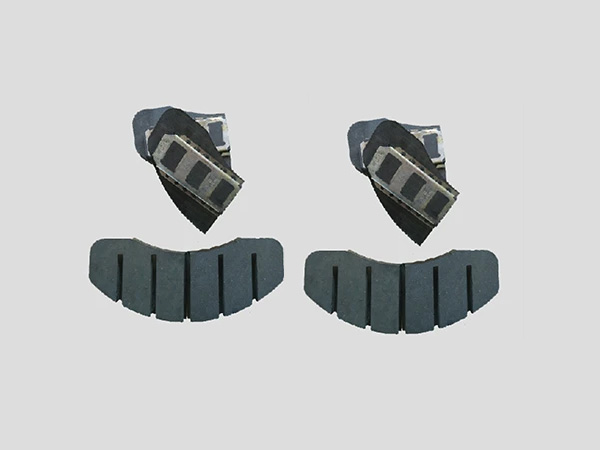
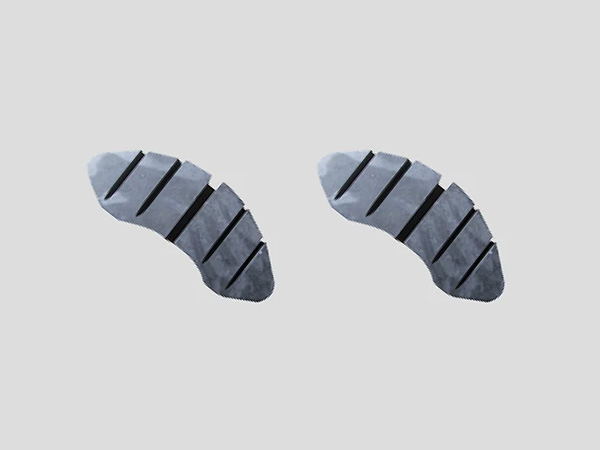
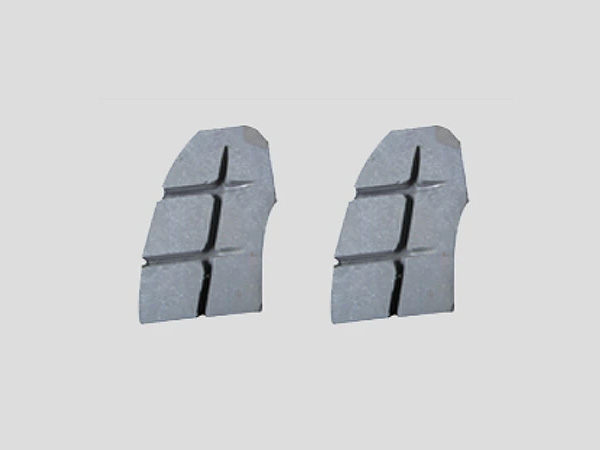
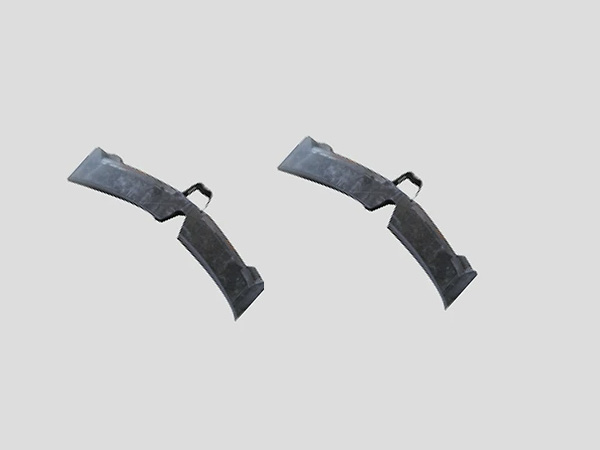
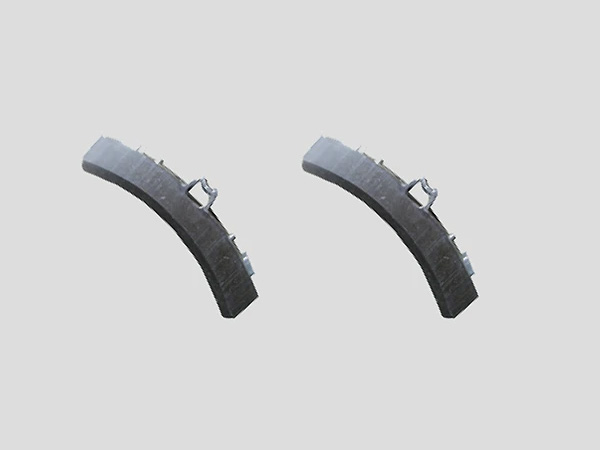
Bus composite brake pads are key components in the bus braking system,used to achieve deceleration and parking of buses.The following is a detailed introduction:
Structural composition
Friction block:It is the part that directly contacts the brake disc and generates friction force.It is usually made of synthetic materials and has good friction and wear resistance properties.
Steel back:High strength steel plates are generally used to support friction blocks and transmit braking force to components such as brake calipers.
Connecting components:used to connect the friction block and the steel back together,ensuring a reliable bond between the two.Common connection methods include riveting,bonding,etc.
Material characteristics
Organic synthetic materials:The friction blocks of synthetic brake pads for passenger cars are usually made of organic synthetic materials,such as resin based composite materials.These materials have good friction properties and can provide stable friction under different working conditions.Meanwhile,organic synthetic materials also have low noise and good comfort,which can reduce noise and vibration during braking.
Reinforcing fibers:In order to improve the strength and wear resistance of friction blocks,reinforcing fibers such as glass fiber,carbon fiber,etc.are usually added to organic synthetic materials.Reinforced fibers can effectively improve the mechanical properties of friction blocks,enabling them to withstand higher braking forces and more frequent braking operations.
Friction modifiers:In order to improve the friction performance of the friction block,some friction modifiers such as graphite and molybdenum disulfide are also added.These friction modifiers can reduce the fluctuation of friction coefficient and make the braking process smoother.
Performance advantages
Good braking performance:The composite brake pads of buses can provide stable and reliable braking force at different speeds,loads,and road conditions,ensuring that buses can stop within the specified distance and ensuring driving safety.
Low noise and vibration:Due to the use of organic synthetic materials and optimized structural design,synthetic brake pads for buses can generate lower noise and vibration during braking,improving passenger comfort.
Long service life:Synthetic brake pads have good wear resistance and can withstand frequent braking operations,resulting in a longer service life and reducing the frequency of brake pad replacement and maintenance costs.
Good thermal stability:During the braking process,the brake pads generate a large amount of heat due to friction.Bus composite brake pads have good thermal stability and can maintain good friction and mechanical properties at high temperatures,avoiding brake failure caused by overheating.
scope of application
Bus composite brake pads are suitable for various types of buses,including city buses,long-distance buses,tourist buses,etc.Different types of buses will use synthetic brake pads with different specifications and performance based on their operating characteristics and braking requirements.For example,urban buses have high requirements for the wear resistance and braking response speed of brake pads due to frequent starting and stopping;Long distance buses and tourist buses have higher requirements for the comfort and thermal stability of the brake pads.